
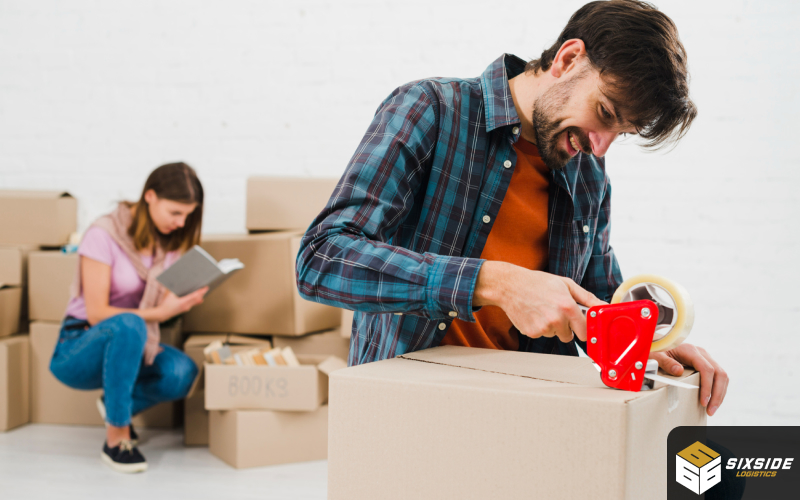
Packaging looks simple from the outside. A product goes into a box, a label goes on it, and the order ships. But if you run a growing B2B or B2C brand, you already know the truth: packaging decisions affect labour costs, shipping rates, storage space, inventory accuracy, product damage, returns, customer experience, and even compliance.
That brings up an important question: should your business choose repacking vs full packaging?
The answer depends on your product, sales channel, budget, and operational goals. In many cases, repacking saves more money because it fixes, adjusts, or improves existing packaging without rebuilding the entire packaging process from scratch. But full packaging can be the better investment when a product needs complete branding, protection, compliance, or retail readiness.
Let’s break it down in practical terms.
What Is Repacking?
Repacking is the process of removing, replacing, repairing, consolidating, relabelling, or adjusting existing packaging so products are ready for storage, shipping, retail, or fulfillment.
Common repacking services include:
- Replacing damaged cartons
- Relabelling products
- Adding barcodes or compliance stickers
- Reboxing items for shipment
- Creating multipacks or bundles
- Preparing promotional kits
- Fixing packaging damaged during container offloading
- Adjusting packaging for retailer or marketplace requirements
For brands that already have usable product packaging, repacking is often the fastest and most cost-effective option. It works especially well when paired with repacking and kitting services inside a professional warehouse environment.
What Is Full Packaging?
Full packaging is a more complete packaging process. It usually involves designing, sourcing, assembling, and applying packaging from the ground up.
Full packaging may include:
- Custom branded boxes
- Protective inserts
- Retail display packaging
- Product sleeves
- Shrink wrapping
- Custom labels
- Printed inserts
- Compliance packaging
- New packaging materials
- Final pack-out for retail or e-commerce
Unlike repacking, full packaging often requires more planning, materials, labour, vendor coordination, and production time.
That does not make it a bad option. In fact, full packaging can be essential for product launches, premium retail goods, private-label products, subscription boxes, and brands that want a stronger customer experience.
But when the question is purely about saving money, full packaging is not always the cheapest route.
Repacking vs Full Packaging: The Main Difference
The easiest way to understand the difference is this:
Repacking improves or modifies existing packaging. Full packaging creates or replaces the packaging system completely.
Repacking is usually tactical. Full packaging is usually strategic.
Repacking solves problems like damaged cartons, incorrect labels, oversized boxes, incomplete kits, and retail preparation issues. Full packaging solves bigger brand and product presentation challenges.
For example, if imported goods arrive in plain cartons and only need barcode labels, bilingual labels, and new outer boxes, repacking may be enough. But if a brand wants custom printed packaging, protective inserts, and a premium unboxing experience, full packaging may be the better choice.
Which Option Saves More Money?
Repacking Usually Saves More Money When Speed and Flexibility Matter
Repacking often costs less because you are not starting from zero. You are using existing product packaging and making targeted improvements.
This can reduce costs in several areas:
- Fewer new packaging materials
- Less design and production time
- Lower labour requirements
- Faster turnaround
- Reduced waste
- Less storage disruption
- Fewer shipment delays
For many growing brands, repacking is the smarter choice when products are already sellable but need adjustments before reaching the customer.
This is common after container offloading, when cartons may arrive damaged, mixed, or not fully prepared for final distribution.
Full Packaging Saves More Money When Poor Packaging Is Creating Bigger Losses
Full packaging can cost more upfront, but it may save money long term if your current packaging is causing damage, returns, poor customer reviews, retailer chargebacks, or inefficient shipping.
For example, if a product regularly breaks in transit because the original packaging is too weak, repacking the same style of box may not solve the issue. A full packaging redesign may reduce damage, improve customer satisfaction, and lower return costs over time.
Returns are not a small issue. The National Retail Federation reported that U.S. retailers expected annual returns to reach $849.9 billion in 2025, with online returns estimated at 19.3% of online sales. That makes packaging quality a direct profit issue, not just an operations detail.
Key Cost Factors to Compare
1. Material Costs
Repacking typically uses fewer materials. You may only need new cartons, labels, tape, inserts, or protective fill.
Full packaging may require custom boxes, printed materials, inserts, design work, dies, packaging samples, and larger minimum order quantities.
If your product already has decent packaging, repacking can help you avoid unnecessary packaging spend.
2. Labour Costs
Repacking can be simple or complex depending on the task. Relabelling a carton is faster than building a custom kit with multiple components.
Full packaging usually requires more touchpoints, especially if products need custom assembly, inspection, inserts, wrapping, or special presentation.
A good 3PL will map the workflow before quoting so you understand where labour costs are coming from.
3. Shipping Costs
Shipping costs are where many businesses lose money without realizing it.
Carriers often price shipments based on dimensional weight when a package is large relative to its actual weight. FedEx explains that each shipment may be charged based on dimensional weight or actual weight, whichever is greater. UPS also advises shippers to consider dimensional weight when packages have a large size-to-weight ratio. Canada Post uses volumetric equivalent calculations when parcel size creates a higher billable weight than actual weight.
This means oversized packaging can quietly increase costs.
Repacking can save money if it allows your 3PL to right-size cartons, consolidate items, or reduce empty space. Full packaging can also save money if the new packaging design reduces dimensional weight across thousands of shipments.
4. Storage Costs
Large packaging takes up warehouse space.
If your product cartons are oversized, you are not just paying more to ship them. You may also be paying more to store them.
Repacking can reduce storage waste by consolidating products or preparing more efficient cartons. Full packaging may be better if the entire packaging format needs to be redesigned for better pallet density or shelf readiness.
If storage costs are increasing, it may be worth reviewing your overall warehouse storage solutions and storage management strategy.
5. Damage and Return Costs
Cheap packaging can become expensive fast.
If packaging fails during shipping, the brand may pay for replacement products, return shipping, customer support, refund processing, and lost customer trust.
Repacking can reduce damage when the issue is limited to outer cartons or poor preparation. Full packaging is better when the product needs stronger structural protection.
The U.S. Environmental Protection Agency also notes that containers and packaging made up 82.2 million tons of municipal solid waste in 2018, or 28.1% of total municipal solid waste generation. This makes efficient packaging important not only for cost control, but also for waste reduction and sustainability messaging.
When Repacking Is the Better Choice
Repacking is usually the better money-saving option when:
- Products already have usable packaging
- Cartons were damaged in transit
- Labels or barcodes need correction
- Products need to be bundled or kitted
- Retailers require minor packaging changes
- You need a fast turnaround
- You want to reduce waste
- You need flexible short-run packaging support
- You are preparing inventory for e-commerce fulfillment
For example, a consumer goods brand importing products into Canada may receive items in manufacturer cartons. The products are fine, but the cartons are not ready for final sale. Instead of investing in full packaging, the brand can use repacking to add new labels, replace damaged boxes, and prepare units for order fulfillment.
That is often faster, cheaper, and easier to scale.
When Full Packaging Is the Better Choice
Full packaging may be worth the investment when:
- You are launching a new product
- Your product needs premium retail presentation
- Current packaging causes frequent damage
- You sell fragile or high-value products
- You need custom branded packaging
- You want a better unboxing experience
- You need packaging designed for retailer shelves
- Compliance requirements cannot be met with simple relabelling
For Canadian food products, for example, mandatory information on many consumer prepackaged foods must appear in both English and French, with CFIA listing core requirements such as common name, date markings, allergen information, net quantity, and nutrition labelling. In some cases, relabelling is enough. In others, a full packaging change may be required.
Example: Repacking vs Full Packaging in Real Life
Imagine a U.S.-based e-commerce brand selling home organization products into Canada.
The brand imports 10,000 units from overseas. The product packaging is acceptable, but some master cartons are crushed, the barcode placement is inconsistent, and the product needs a bilingual sticker for Canadian distribution.
A full packaging project would require redesigning and replacing all packaging. That may be unnecessary.
A repacking workflow could include:
- Inspecting cartons
- Replacing damaged outer boxes
- Applying corrected barcode labels
- Adding bilingual stickers
- Sorting inventory by SKU
- Updating stock in the warehouse system
- Preparing units for fulfillment
In this case, repacking saves money because the product does not need a total packaging rebuild.
Now imagine the same brand receives repeated complaints that products arrive broken. The box is too thin, there is no internal protection, and customers are leaving negative reviews.
In that situation, full packaging may save more money over time because it addresses the root cause.
How a 3PL Helps You Choose the Right Option
A strong 3PL does not simply ask, “Do you want repacking or packaging?”
It looks at the full cost picture.
That includes:
- Product value
- Shipping method
- Carton size
- SKU complexity
- Damage rate
- Return rate
- Labour requirements
- Retailer requirements
- Inventory visibility
- Order volume
- Storage space
- Customer expectations
With the right warehouse management system and real-time inventory tracking, a 3PL can help brands avoid packaging decisions that create inventory errors, fulfillment delays, or unnecessary costs.
If your business is growing and packaging tasks are becoming harder to manage internally, you may also want to review these guides on how to choose a 3PL provider in Canada and questions to ask before choosing a 3PL provider.
Actionable Tips to Reduce Packaging Costs
Audit Your Current Packaging
Measure actual box sizes, product weight, empty space, damage rates, and return reasons.
Compare Actual Weight vs Dimensional Weight
If dimensional weight is driving shipping charges, right-sizing packaging may create immediate savings.
Separate Cosmetic Issues From Structural Issues
If the packaging only looks bad, repacking may work. If it fails to protect the product, consider full packaging.
Track Labour by Workflow
Do not just compare material costs. Track how long each packaging or repacking task takes.
Use Kitting Strategically
If customers often buy the same products together, pre-built kits can reduce pick-and-pack time. Learn more through repacking and kitting.
Review Packaging Before Peak Season
Fixing packaging problems during holiday demand or major retail promotions is expensive. Plan before volume spikes.
FAQs About Repacking vs Full Packaging
What is the difference between repacking and full packaging?
Repacking modifies or improves existing packaging, while full packaging creates or replaces the entire packaging system. Repacking is usually faster and less expensive, while full packaging is more comprehensive.
Is repacking cheaper than full packaging?
In most cases, yes. Repacking usually costs less because it uses existing packaging and requires fewer materials, less planning, and faster labour. However, full packaging may save more long term if current packaging causes damage or returns.
When should I choose repacking?
Choose repacking when products are already packaged but need relabelling, reboxing, bundling, inspection, or minor adjustments before shipping or retail distribution.
When should I choose full packaging?
Choose full packaging when you need custom branding, better product protection, retail-ready presentation, or a complete packaging redesign.
Can a 3PL handle both repacking and full packaging support?
Yes. A 3PL can support repacking, kitting, labelling, fulfillment preparation, storage, and shipping workflows. Some providers can also coordinate packaging materials and custom assembly.
Does packaging affect shipping costs?
Yes. Package size can affect billable weight because carriers may charge based on dimensional weight instead of actual weight when the box is large relative to its weight.
Final Verdict: Which Option Saves More Money?
If your existing packaging is mostly functional, repacking usually saves more money. It is faster, more flexible, less material-intensive, and ideal for fixing packaging issues without overhauling the entire process.
But if poor packaging is causing product damage, returns, retailer problems, or customer dissatisfaction, full packaging may be the smarter long-term investment.
The best answer comes from looking at total cost, not just packaging cost. Shipping, storage, labour, damage, compliance, returns, and customer experience all matter.
SixSide Logistics helps B2B and B2C brands across Canada and the USA make smarter packaging decisions through repacking, kitting, warehousing, fulfillment, inventory tracking, and supply chain support.
Want to find out whether repacking or full packaging is right for your business?
Contact SixSide Logistics today to discuss a cost-effective packaging and fulfillment workflow built around your products, customers, and growth goals.