
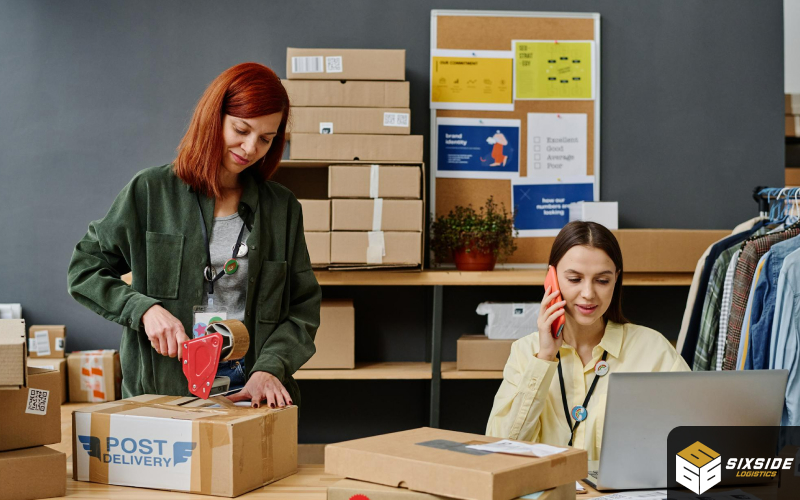
In e-commerce, speed does not start when the customer clicks “buy.” It starts when inventory enters your warehouse.
If receiving is slow, everything downstream slows down too: stock availability, order fulfillment, replenishment, returns processing, and customer delivery. For brands selling across Canada and the USA, delays can quickly lead to stockouts, missed promotions, higher storage costs, and lost revenue.
That is why many growing online brands work with a 3PL provider to improve receiving times and create a smoother flow from inbound shipment to customer delivery.
A strong 3PL does more than store products. It receives, verifies, scans, sorts, labels, stages, repacks, and moves inventory into fulfillment faster.
What Is E-Commerce Receiving?
E-commerce receiving is the process of accepting inbound inventory into a warehouse or fulfillment center. It usually includes:
- Booking inbound appointments
- Unloading cartons, pallets, or containers
- Matching goods to purchase orders
- Inspecting products for damage
- Counting units
- Scanning barcodes
- Updating inventory systems
- Moving stock into storage or fulfillment
For importers, receiving may also involve customs-related documentation. In Canada, CBSA states that commercial importers need a business number and import/export program account to bring goods across the border. In the U.S., CBP’s ACE platform is the electronic single-window system used for trade processing, including manifest and cargo release data.
Clean documentation and fast warehouse receiving must work together. If one fails, inventory sits.
How a 3PL Improves Receiving Times
1. Pre-Arrival Planning Prevents Bottlenecks
The fastest receiving process starts before inventory arrives.
A 3PL can coordinate inbound shipment details, delivery appointments, purchase orders, SKU lists, carton counts, and special handling instructions in advance. This reduces confusion when the truck or container reaches the dock.
For imported goods, pre-planning is especially important. With professional container offloading, a 3PL can prepare dock space, labour, equipment, and staging areas before the container arrives.
Actionable tip: Send your 3PL a complete inbound shipment notice with supplier name, tracking details, SKU list, expected quantities, carton dimensions, and labeling requirements.
2. A WMS Speeds Up Inventory Check-In
Manual receiving is slow and error-prone. A modern warehouse management system helps warehouse teams receive products faster by connecting purchase orders, barcode scans, inventory locations, and fulfillment workflows.
A WMS can help:
- Match received units to expected quantities
- Flag shortages or overages
- Assign storage locations
- Print or verify labels
- Update stock availability
- Reduce manual data entry
Barcode accuracy matters because GS1 notes that barcodes help supply chain partners automatically identify and track products as they move through the supply chain.
For e-commerce brands with multiple SKUs, bundles, or sales channels, this can make the difference between inventory being available today or sitting unprocessed for days.
3. Real-Time Inventory Tracking Makes Stock Available Faster
Receiving is not complete when goods are unloaded. It is complete when inventory is visible and usable.
Real-time inventory tracking helps e-commerce brands know which products are available, pending inspection, damaged, reserved, or ready for fulfillment.
This matters because customers expect accurate product availability. If your website shows inventory that your warehouse has not processed yet, you risk overselling. If inventory is received but not updated quickly, you miss sales.
Actionable tip: Ask your 3PL how quickly received inventory becomes visible in your system or sales platform.
4. Better Warehouse Layout Reduces Handling Time
Poor warehouse layout slows receiving. If products move from dock to inspection, then to labeling, then back to staging, then to storage, your team wastes time with unnecessary touches.
A good 3PL designs receiving areas around flow:
- Dock unloading area
- Inspection station
- Labeling area
- Damaged goods zone
- Putaway staging
- Fast-moving inventory zone
- Fulfillment-ready storage
Flexible warehouse storage solutions can also prevent congestion when inbound volume increases during peak seasons.
5. Repacking and Kitting Can Happen During Receiving
Many e-commerce brands lose time by receiving products first and fixing packaging later.
A 3PL can speed up the process by adding repacking and kitting directly into the receiving workflow. This is useful when products arrive with damaged cartons, missing barcodes, marketplace labels, or components that need to be bundled.
Examples include:
- Applying new barcodes
- Replacing damaged packaging
- Creating subscription boxes
- Building promotional bundles
- Preparing retail-ready units
- Adding inserts or instructions
The fewer times a product is handled, the faster it moves into order fulfillment.
6. Cross-Docking Moves Priority Inventory Faster
Not every product needs to go into storage.
If inventory is pre-sold, backordered, seasonal, or assigned to retail replenishment, cross-docking can move goods from inbound receiving directly to outbound shipping with minimal storage time.
This is especially valuable for:
- Product launches
- Flash sales
- Holiday inventory
- Backordered items
- Retail replenishment
- High-demand SKUs
For e-commerce brands, cross-docking can help turn inbound stock into revenue faster.
Example: How a 3PL Improves Receiving for an Online Brand
Imagine a Canadian skincare brand selling through Shopify, Amazon, and wholesale retailers. Before working with a 3PL, inbound shipments took three to five days to receive because cartons were mixed, barcodes were inconsistent, and the internal team manually updated inventory.
After moving to a 3PL receiving model, the brand created standardized inbound shipment rules, used barcode scanning, added repacking during receiving, and connected inventory updates to fulfillment.
The result: priority SKUs became available within 24 hours, stockouts decreased, and the brand fulfilled promotional orders faster.
That speed matters. NRF reported that an estimated 19.3% of online sales would be returned in 2025, which means e-commerce brands already face heavy reverse-logistics pressure. Faster, more accurate receiving helps reduce additional operational friction by improving inventory accuracy and shipment readiness.
How to Choose a 3PL for Faster Receiving
Not every 3PL is built for fast e-commerce receiving. Look for a partner that offers:
Clear Inbound Requirements
Your 3PL should provide receiving guidelines for labeling, carton counts, ASN details, appointments, pallet requirements, and documentation.
Technology Integration
Ask whether the provider supports WMS tools, barcode scanning, inventory visibility, and e-commerce platform integration.
Scalable Labour and Space
Peak seasons require extra labour, dock space, and storage flexibility. If your business is growing quickly, review these signs your business needs third-party warehousing.
Full-Service Support
The best 3PL partners can support receiving, storage management, repacking, kitting, fulfillment, cross-docking, and North American shipping.
Before signing an agreement, review these questions to ask before choosing a 3PL provider.
FAQs About Improving Receiving Times with a 3PL
What is 3PL receiving?
3PL receiving is the process where a third-party logistics provider accepts, unloads, inspects, counts, scans, and stores inventory on behalf of a business.
How can a 3PL improve receiving times?
A 3PL improves receiving times through pre-arrival planning, trained warehouse teams, barcode scanning, WMS tools, organized storage, container offloading, and faster inventory updates.
Why is receiving important for e-commerce?
Receiving determines how quickly new inventory becomes available for sale and fulfillment. Slow receiving can cause stockouts, delayed orders, and poor customer experiences.
Can a 3PL handle imported inventory?
Yes. A 3PL can support imported inventory through container offloading, documentation coordination, inspection, sorting, labeling, storage, and fulfillment preparation.
How do I prepare inventory for faster 3PL receiving?
Send complete shipment details in advance, label cartons clearly, provide SKU-level packing lists, use consistent barcodes, and follow your 3PL’s inbound receiving guidelines.
Final Thoughts: Faster Receiving Creates Faster Growth
Improving receiving times is one of the most practical ways e-commerce brands can increase speed, reduce errors, and improve customer satisfaction.
A reliable 3PL helps turn inbound inventory into sellable inventory faster by combining planning, warehouse systems, trained teams, real-time tracking, and fulfillment-ready workflows.
Six Side Logistics helps e-commerce brands across Canada and the USA improve receiving, storage, repacking, kitting, fulfillment, and shipping operations.
Ready to make your inventory available faster? Contact Six Side Logistics today to build a faster, more reliable receiving process for your e-commerce brand.